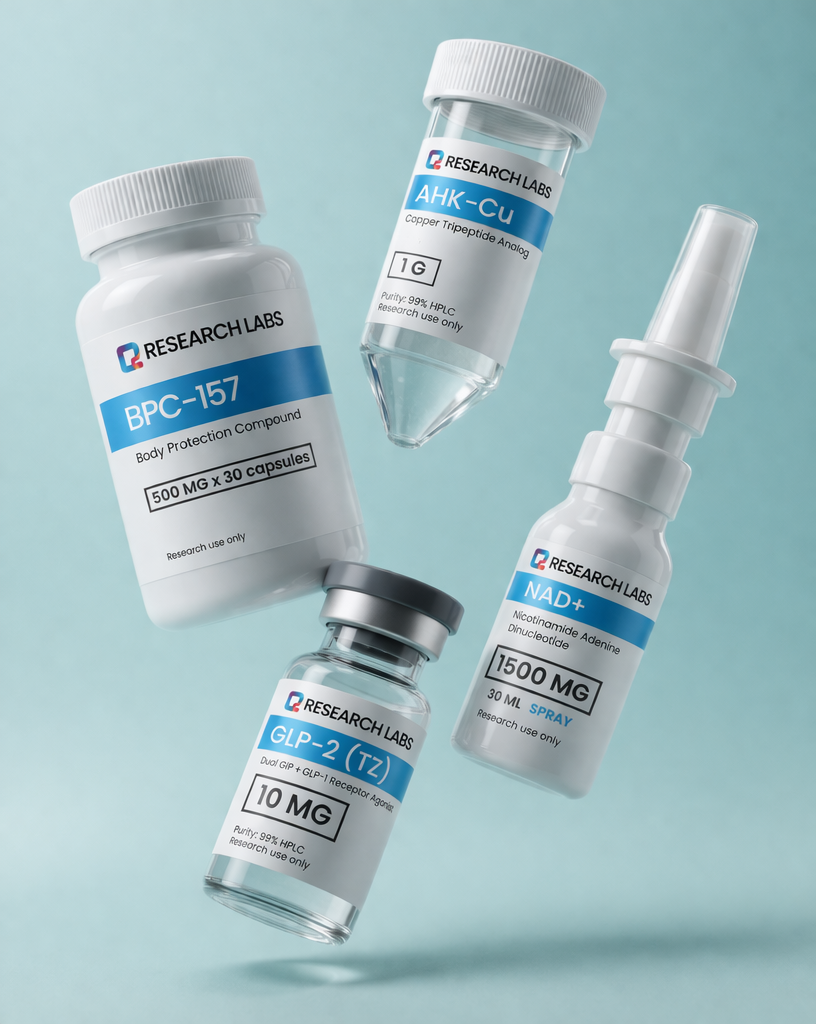
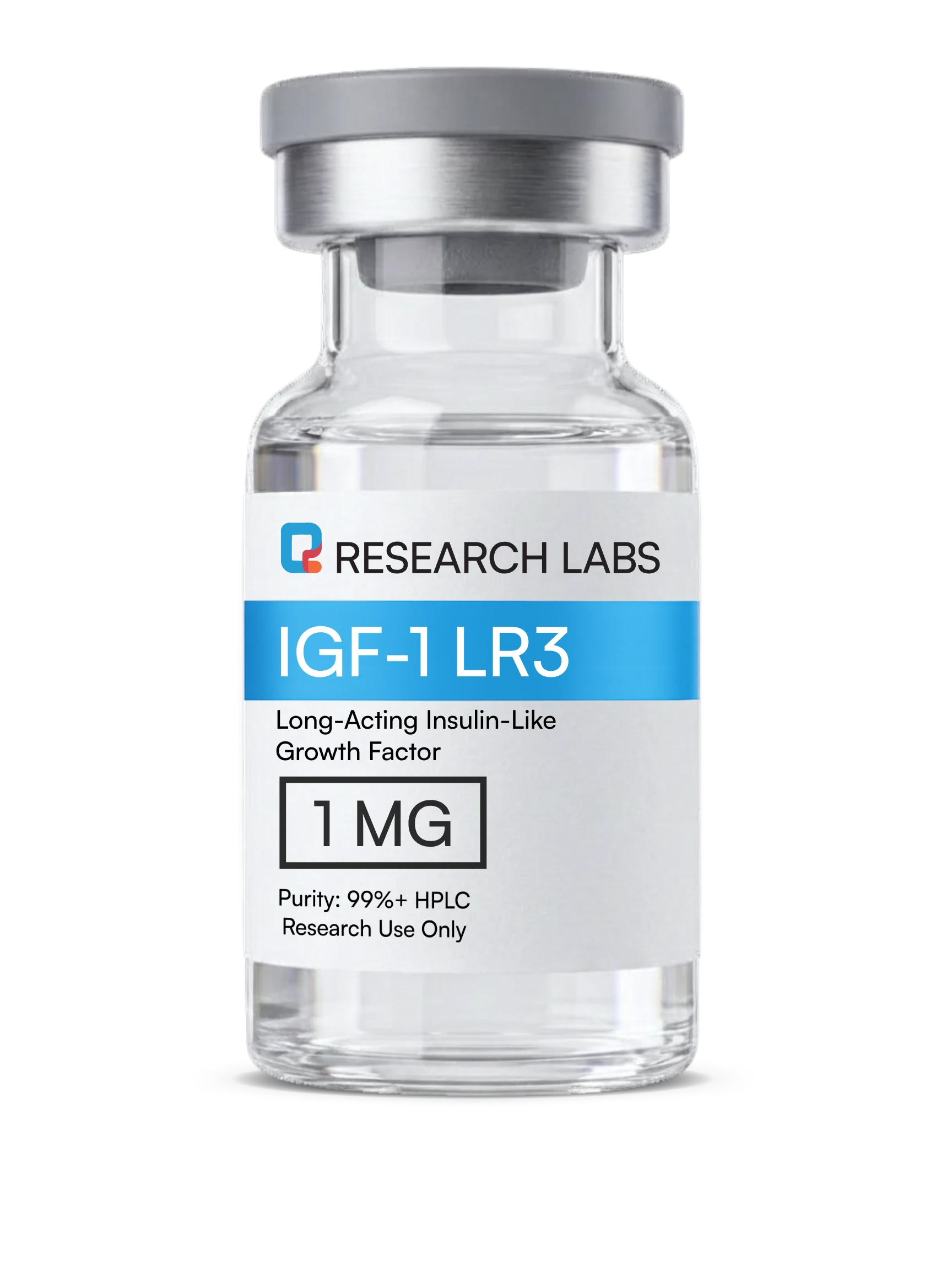
IGF-1 LR3
Long-Acting Insulin-Like Growth Factor
CAS: 946870-92-4
Formula: C400H625N111O115S9
M.W.: 9117.5099 g/mol
Purity: 99%+ HPLC Verified
Ref No.: IGF-0001VI
For Research Use Only (RUO)
Not for human or veterinary use.
IGF-1 LR3
Category
GH / Neuro / Misc Research
CAS Number
946870-92-4
Form Factor
Lyophilized Powder
In stock, ready to ship
Ships same day before 12pm PST
Products are shipped in lyophilized powder form.
IGF-1 LR3 is a synthetic insulin-like growth factor-1 analogue containing an arginine substitution and a 13-amino-acid N-terminal extension. These structural modifications are studied for their effect on IGF-binding-protein affinity and pharmacokinetic behavior relative to native IGF-1. Laboratory research examines its interaction with IGF-1 receptor signaling, cellular proliferation, satellite-cell activity, and neuronal-signaling pathways. For laboratory research use only.
Description
IGF-1 LR3 is a synthetic insulin-like growth factor-1 analogue containing an arginine substitution and a 13-amino-acid N-terminal extension. These structural modifications are studied for their effect on IGF-binding-protein affinity and pharmacokinetic behavior relative to native IGF-1. Laboratory research examines its interaction with IGF-1 receptor signaling, cellular proliferation, satellite-cell activity, and neuronal-signaling pathways. For laboratory research use only.Chemical Information
CAS Number
946870-92-4
Purity
99%+ HPLC Verified
Molecular Formula
C400H625N111O115S9
Molar Mass
9117.5099 g/mol
Form Factor
Lyophilized Powder
Synonyms
Research Applications
- Muscle-Biology Research: IGF-1 LR3 is investigated for its effects on IGF-1 receptor signaling in skeletal-muscle models. Research endpoints include satellite-cell activity, protein-synthesis pathways, myogenic differentiation, cellular proliferation, and muscle-tissue remodeling.
- Neuroscience Research: IGF-1 LR3 is studied for its influence on neuronal-survival pathways, oligodendrocyte activity, myelination, synaptic plasticity, and neurodevelopmental signaling in experimental neural models.
- Pharmacokinetics Research: IGF-1 LR3 is evaluated as a modified growth-factor analogue with reduced affinity for IGF-binding proteins. Research examines how its arginine substitution and N-terminal extension affect binding kinetics, metabolic stability, systemic distribution, and functional exposure relative to native IGF-1.
- Cell-Biology Research: IGF-1 LR3 is studied for its effects on proliferative and survival-associated signaling. Investigations focus on nitrogen-balance markers, cell-cycle progression, apoptosis regulation, and activation of PI3K/Akt and MAPK/ERK pathways.
Storage Conditions
Unreconstituted
Store at -20°C to 4°C (freezer or refrigerator). Stable for 24+ months.
Reconstituted
Refrigerate at 2–8°C. Use within 30 days for optimal stability.
Avoid
Repeated freeze-thaw cycles, direct sunlight, and temperatures above 25°C.
Safety & Compliance
- Wear nitrile gloves and safety goggles when handling research compounds.
- Work in a clean, controlled environment (laminar flow hood recommended).
- Dispose of sharps and used materials in approved biohazard containers.
- This product is for laboratory research use only (RUO) — not for human or veterinary use.
Learn More About Peptides
Explore our research library covering purity, synthesis, storage, solubility, and more.
Research Database
Browse peer-reviewed studies, clinical trials, and scientific sources behind our peptide resources.
You May Also Like
-
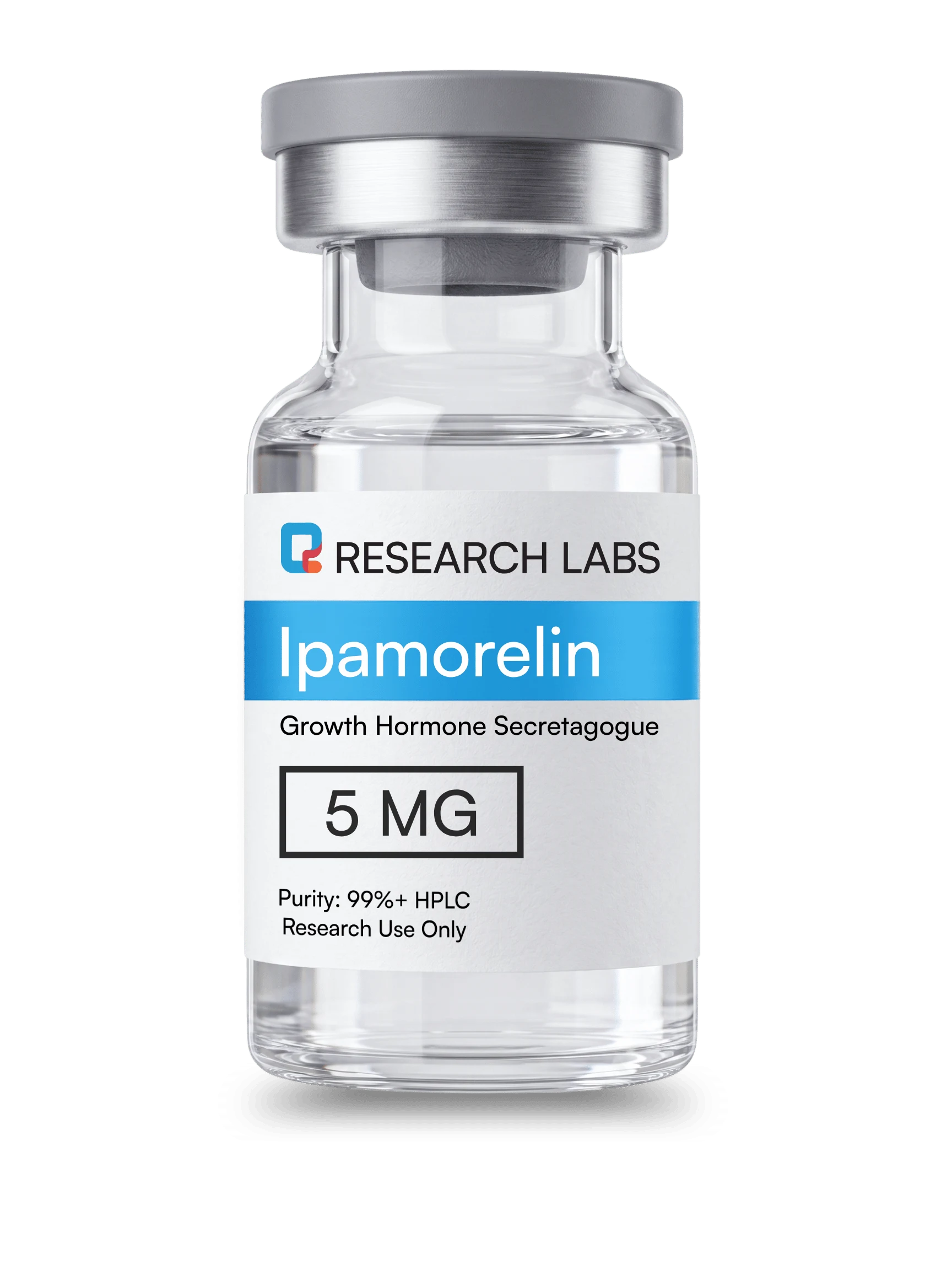 $44.99 – $64.99
Ipamorelin
GH / Neuro / Misc ResearchThis product has multiple variants. The options may be chosen on the product page View Details -
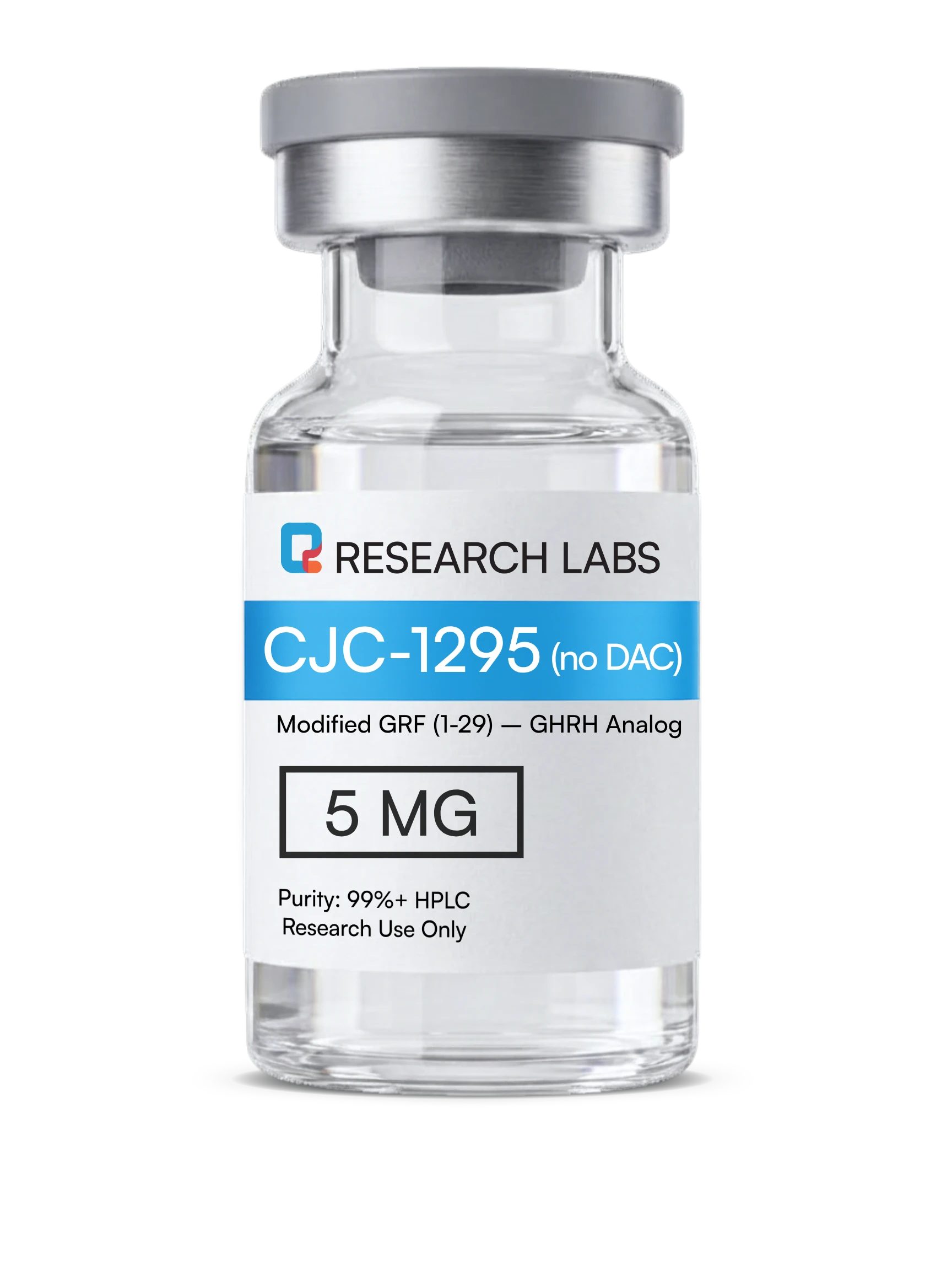 $64.99
CJC-1295 (no DAC)
GH / Neuro / Misc ResearchThis product has multiple variants. The options may be chosen on the product page View Details -
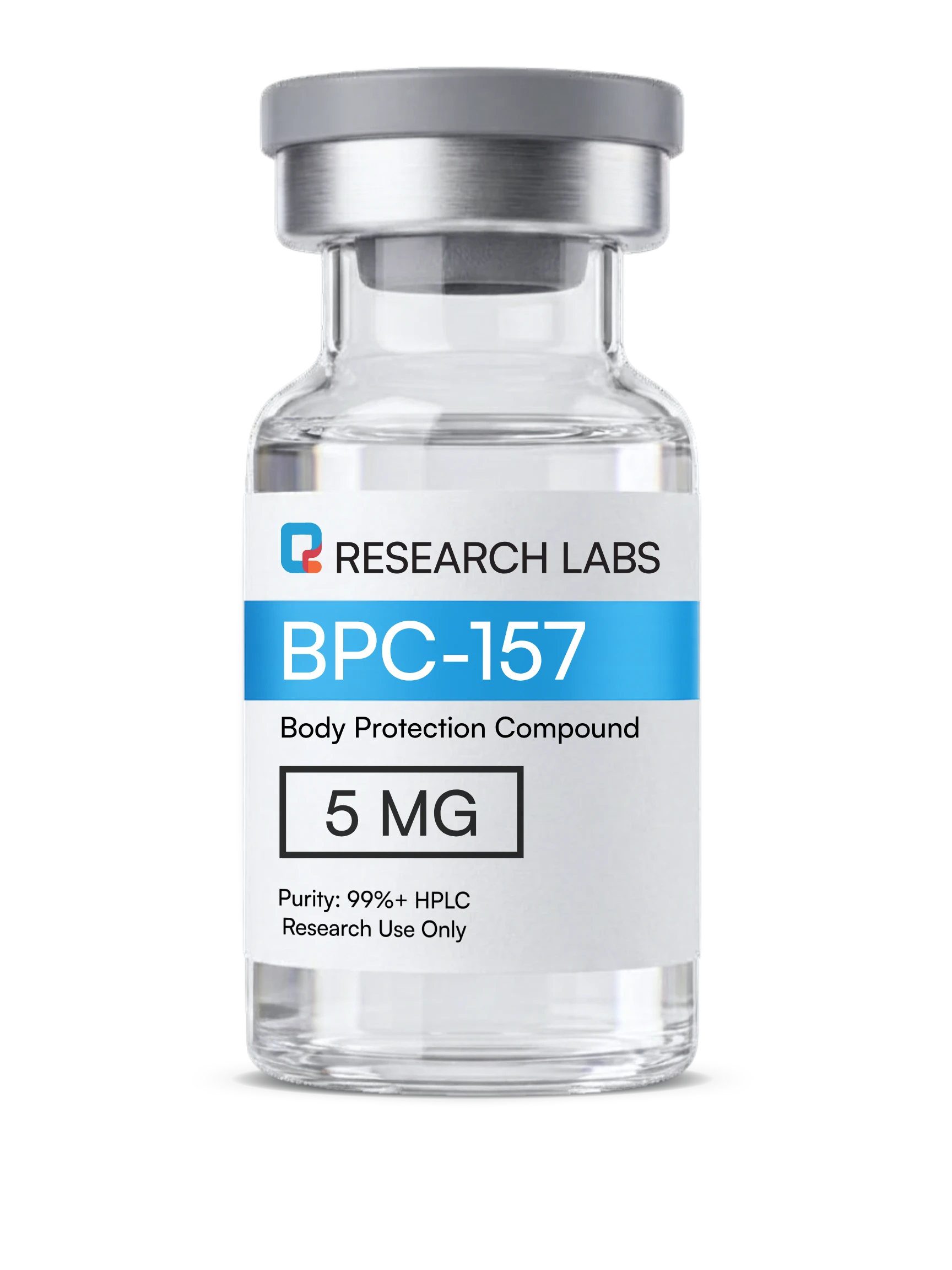 $59.99 – $79.99
BPC-157
Regenerative ResearchThis product has multiple variants. The options may be chosen on the product page View Details -
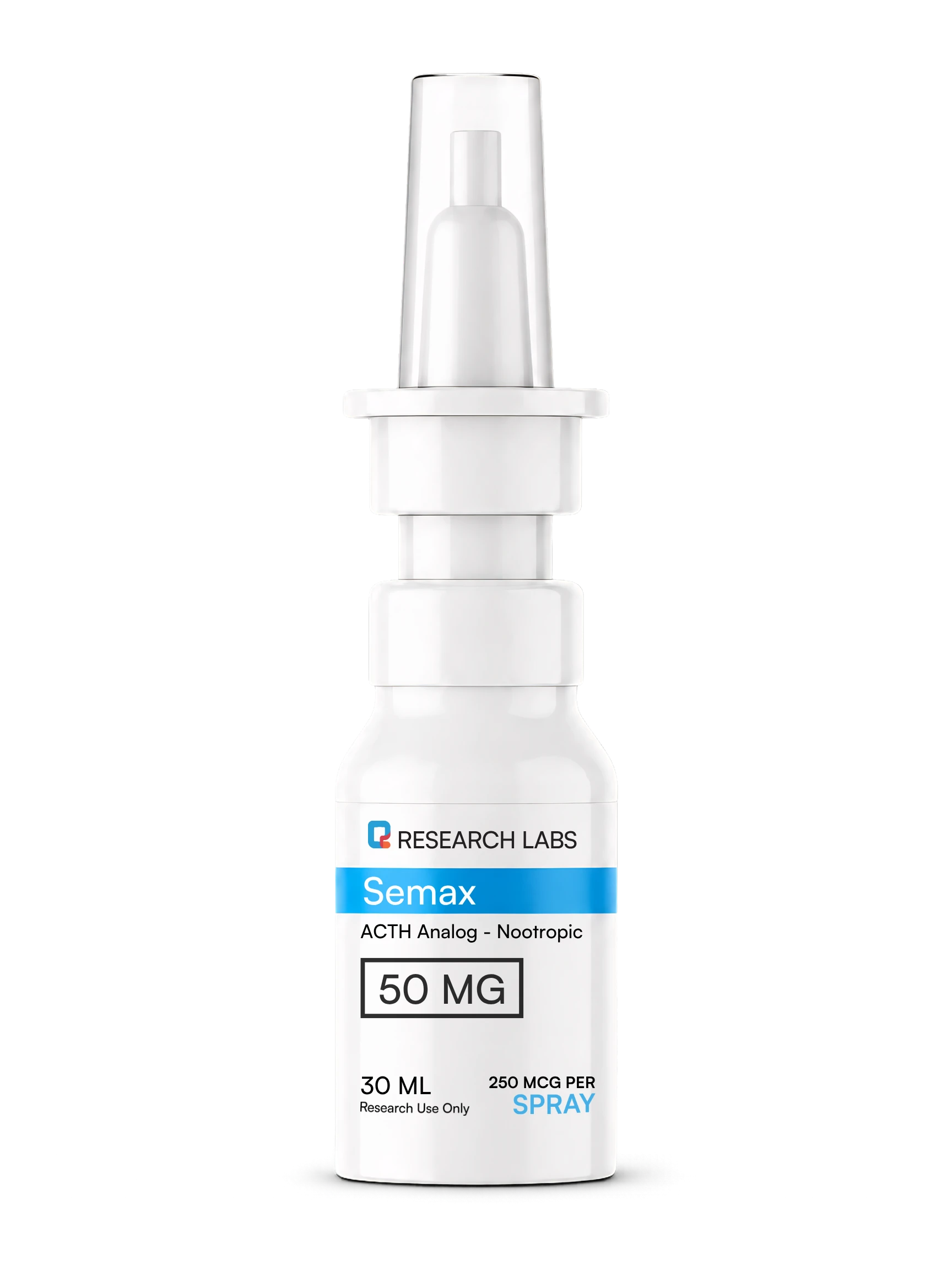 $124.99
Semax (Spray)
GH / Neuro / Misc ResearchThis product has multiple variants. The options may be chosen on the product page View Details
For GH-mediated IGF-1 amplification Research
For GHRH pulsatile support Research
For Tissue repair & recovery Research
Popular Product
Description
IGF-1 LR3 is a synthetic insulin-like growth factor-1 analogue containing an arginine substitution and a 13-amino-acid N-terminal extension. These structural modifications are studied for their effect on IGF-binding-protein affinity and pharmacokinetic behavior relative to native IGF-1. Laboratory research examines its interaction with IGF-1 receptor signaling, cellular proliferation, satellite-cell activity, and neuronal-signaling pathways. For laboratory research use only.Chemical Information
CAS Number
946870-92-4
Purity
99%+ HPLC Verified
Molecular Formula
C400H625N111O115S9
Molar Mass
9117.5099 g/mol
Form Factor
Lyophilized Powder
Synonyms
Research Applications
- Muscle-Biology Research: IGF-1 LR3 is investigated for its effects on IGF-1 receptor signaling in skeletal-muscle models. Research endpoints include satellite-cell activity, protein-synthesis pathways, myogenic differentiation, cellular proliferation, and muscle-tissue remodeling.
- Neuroscience Research: IGF-1 LR3 is studied for its influence on neuronal-survival pathways, oligodendrocyte activity, myelination, synaptic plasticity, and neurodevelopmental signaling in experimental neural models.
- Pharmacokinetics Research: IGF-1 LR3 is evaluated as a modified growth-factor analogue with reduced affinity for IGF-binding proteins. Research examines how its arginine substitution and N-terminal extension affect binding kinetics, metabolic stability, systemic distribution, and functional exposure relative to native IGF-1.
- Cell-Biology Research: IGF-1 LR3 is studied for its effects on proliferative and survival-associated signaling. Investigations focus on nitrogen-balance markers, cell-cycle progression, apoptosis regulation, and activation of PI3K/Akt and MAPK/ERK pathways.
Storage Conditions
Unreconstituted
Store at -20°C to 4°C (freezer or refrigerator). Stable for 24+ months.
Reconstituted
Refrigerate at 2–8°C. Use within 30 days for optimal stability.
Avoid
Repeated freeze-thaw cycles, direct sunlight, and temperatures above 25°C.
Safety & Compliance
- Wear nitrile gloves and safety goggles when handling research compounds.
- Work in a clean, controlled environment (laminar flow hood recommended).
- Dispose of sharps and used materials in approved biohazard containers.
- This product is for laboratory research use only (RUO) — not for human or veterinary use.
Learn More About Peptides
Explore our research library covering purity, synthesis, storage, solubility, and more.
Research Database
Browse peer-reviewed studies, clinical trials, and scientific sources behind our peptide resources.