Understanding the Importance of Third-Party COA Verification
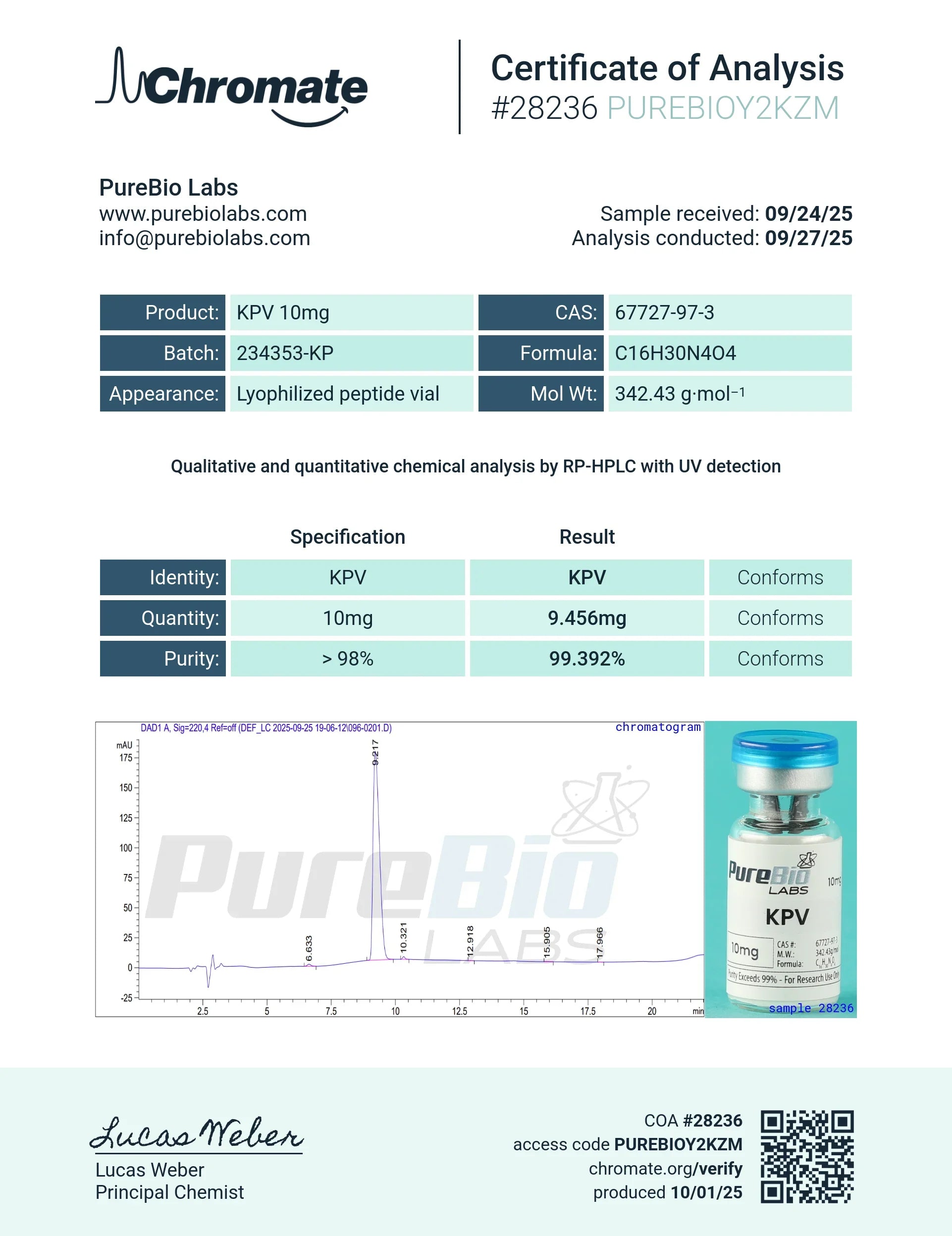
Verifying the Certificate of Analysis (COA) is a critical step for researchers to ensure the chemical integrity and purity of KPV peptides before beginning experimental procedures. By utilizing independent, third-party testing, Research Labs provides an objective assessment that confirms the compound matches its labeled specifications, thereby reducing the risk of experimental failure due to impurities.
These reports typically detail HPLC purity results, mass spectrometry data, and heavy metal screening, which are essential metrics for maintaining high standards in laboratory environments. Accessing these documents allows principal investigators and lab managers to maintain rigorous quality control protocols consistent with academic and biotech industry requirements.
Interpreting HPLC Purity Results in Peptide Research
High-Performance Liquid Chromatography (HPLC) is the industry standard for determining the chemical purity of peptides, and understanding these results is vital for accurate data collection. A high percentage of purity indicates that the sample is free from significant degradation products or synthetic by-products that could interfere with biological assays or chemical reactions.
Researchers should look for purity ratings consistently above 98% to ensure the reliability of their research outcomes. When reviewing the COA, it is important to cross-reference the batch number on the report with the specific product received to confirm that the analytical data corresponds directly to the material being used in the study.